Friday, January 27, 2006

More batteries

I got a whole boat load (well, trunk load really) of batteries from a friend to test. He inherited them from someone who moved out of state and didn't want to take the whole load with him. There are some that are unused (still in their original boxes). I calculated that on the way home, I had 800 Amp Hours of 12 v power in the vehicle. That would have been at full rated capacity of course. These are all AGM batteries (like this one) that were either used or destined for use in wheelchairs.

Anyway, the first couple I tested were not so good; they are rather old and had been in use for quite some time (one was dated 1998). These 70 AH rated batteries topped out at 30 and 50 Ah after three cycles of charge/discharge.

Next, I tested (well, I'm still working on them) two of the "unused" batteries. They look fairly new, but I can tell that they've been hooked up to something before - even if only for a short time - because of the marks on the terminals. These two are doing much better! I charged one of them up partially (using my new Schumacher WM-2500A charger). The first time around it tested at about 50 AH. On the next cycle after charging it fully, it was up to 67 AH under a 0.1C load (this is actually its rated capacity - 75 AH * 0.9 = 67.5). On these big batteries, 0.1C is about the highest load I can use on my tester.

The second "unused" battery is undergoing its second test. I charged this one up completely for its first test and it measured 63 AH. The trace on the current test is running somewhat higher than the first one so far, but I'm only about 10 AH into it.

I'll probably cycle these two batteries one more time after this to see if they continue to improve significantly.

Interesting notes:

  1. I learned from the spec sheet I listed above that they recommend a maximum 15 AH charge rate. I had read elsewhere that you can use a rate up to 40% of the rated capacity of the battery. This was why I selected the 25 AH charger to begin with for these 70-80 AH batteries. It's not that big of a deal to use the 12 AH rate; it still takes overnight anyhow. I like having the capability of getting a battery (or multiple batteries) charged up quickly if need be...
  2. Even though a charger is rated at 25 Amps, you can't charge a dead 75 AH battery in 3 hours. It takes overnight or so (each battery is a little different) for it to absorb that last 10% of energy before it's "fully charged."
  3. My fancy new charger does a few cool things to keep the charge rate up. Initially, it hits the battery with as much current as it can while keeping the voltage under a certain level (it seems to use about 15.5 volts or so). This seems high, but it only does it for a short time to gauge the battery. Then, it just dumps as much charge into the battery as it can (it peaked at 30 Amps according to my Whatt Meter in the 25 Amp mode) until the voltage nears the maximum for whatever battery type it's charging. It tapers off until the voltage tops out at whatever its cut-off voltage is and it goes into "float mode" (where it seems to hold at about 13.8 volts - which is perfect for AGM batteries). This taper period is why the charge takes longer than just Capacity / Charge Rate. On batteries that are badly sulfated (at least I think that's why it was doing it in one of these batteries), the voltage quickly goes high and the charger went into float mode. It was putting 2.5 Amps constant into the battery for several hours before it tapered again and then started cycling up and down to a maximum of several hundred milliamps while holding at 13.8 volts.
  4. The "float mode" of this charger is really a cycle where it raises the voltage to 13.8 volts and then shuts down until the voltage drops a few tenths of a volts and it ramps back up again. It does it quickly so it's hard to get a good reading on my digital meter.
  5. Because of this pseudo float mode, getting the battery completely and fully charged would take quite a while on this charger. I would say that charging it up most of the way with the fast charger and then putting it on a power supply (like a UPS or a Ham Radio supply) that holds a constant voltage is a faster way to get a full charge.

Monday, January 23, 2006

UCARES Training Item

Training Item given on the Utah County ARES net on 23 Jan 2006
(It was originally scheduled for 17 Jan, but was delayed a week)


[2006-02-03 Note: Eric Harrison KE7BQE send me an e-mail saying that he recorded the net and has posted it here: http://www.thirdpicket.com/plone/site/Members/eric/blogs/blog/archive/2006/02/03/battery-training-item Thanks Eric!]
I’ve played a lot recently playing with batteries and I thought I’d talk tonight about some of the many types of batteries we may encounter in the Amateur Radio world, and I’ll briefly mention a few of their characteristics.
First, the standard non-rechargeable types everyone has used are of course the Alkaline batteries that we get from the grocery store. These come in all sizes from N to D. One of the most important attributes of Alkaline batteries in Amateur Radio or Emergency Communications situation is that they are available almost anywhere. I’ll come back to this point later.
Non-rechargeable lithium batteries are widely available in 9v, 123 and AA sizes. Some of the advantages of non-rechargeable lithium batteries in commonly used sizes are that they are lighter than akalines and they last longer in devices like GPS units, flashlights, digital cameras, and so forth. Hikers, cavers, and others are often willing to pay a little extra for these high-performance batteries.
Rechargeable batteries in commonly available sizes come in two main chemistries, Nickel Cadmium (also referred to as Ni-Cad) and the newer Nickel Metal Hydride (or NiMH). A key advantage of rechargeable batteries over alkaline is that they cost less for the power that they provide over their lifetimes.
Rechargeable battery packs for Hand-Held radios come in three main types, NiCd, NiMH, and the newer Lithium based chemistries.
Other types of batteries I’d like to include as useful to Hams tonight are Lead Acid batteries. Car and Boat type Lead Acid batteries are most often the Flooded Electrolyte type (they have liquid that sloshes around inside them which can spill if they are tipped over). Sealed Lead Acid batteries – the kind that Hams like to carry around – don’t spill if tipped over and are often used in things like wheelchairs, electric scooters, those cordless 20 trillion candle-power spotlights, and so forth.
Rechargeable NiCd batteries have been in use for over 60 years. Sealed Lead Acid batteries have been around for 30-40 years. NiMH and Lithium-Ion batteries became widespread in the 1990’s. The new polymer based lithium batteries are barely 5 years old. And more types are coming I’m sure.
So now that I’ve mentioned a few different types of batteries, I’d like to talk a little about the advantages, disadvantages and care of each type.
First, back to the point I made earlier about batteries you can buy at a grocery store. If your equipment can run from these types of batteries, you will have a very good chance of being able to borrow some spares from someone else if yours happen to go dead sometime. Whether it’s a public service event or an actual emergency you will probably be able to get AA size batteries. While I have not always been completely successful, I have made an effort to make sure that all of my portable emergency communications gear can run from AA sized batteries. This way I don’t have to carry separate sets of spares for each device and my radio can share batteries with my flashlight if the need arises.
A little now about rechargeable battery packs like the ones on most handheld radios. I’m going to be fairly simplistic here as there is quite a lot of science behind these packs and yours may differ or contain a new technology or whatever; so IN GENERAL here are some tips to help your battery packs last longer and give you the most operating time per charge.
If you have a Nickel based pack (NiCd or NiMH), run it down at least every 5-10 times you charge it. If your radio automatically shuts itself off when the voltage drops too low, you are better off than some of us who have Kenwood radios that don’t do that. Some radios really will run a battery pack down completely – all the way to 0 volts if you let it go that far. This is particularly bad because a battery pack is typically made up of multiple cells. Running the pack completely dead will most likely damage one or more of the weaker cells inside. In short – run it down, but not dead every 5 to 10 times you charge it.
If you have a lithium based pack, charge it at any and every convenient time. Lithium based batteries do better if they are discharged partially and recharged multiple times than if they are completely discharged on each cycle. Lithium batteries will die within a few years whether they are used or not. Their chemistry is such that they are on a downward slope from the day they are made. Lithium packs cannot be charged with chargers that are not specially designed for charging them.

Cycling either Nickel or Lithium based battery packs in hot environments significantly shortens their lifetimes. Cycling them at 85 degrees, will reduce their life by about 20%, and their life may be reduced by as much as 40% at 100 degrees. That doesn’t mean that you will get less talk-time if you charge a battery while it’s at 100 degrees, it just means that you won’t be able to cycle them as many times. Sitting a radio on the seat of a car in the summertime and charging the battery pack while it’s at 120 degrees is hard on the pack. Some smarter battery chargers won’t even start to charge when they detect too high a temperature.

Sealed Lead Acid or SLA batteries, like Lithium based batteries, do great when they are charged as often as possible. Unlike the other types, SLA batteries do great when they are left on float chargers that are designed specifically for them. Unfortunately, car or boat float chargers, or motorcycle battery chargers are not designed for use with Sealed Lead Acid batteries. Let me repeat this in stronger terms. Hooking an SLA battery to a float charger not designed for an SLA battery could destroy the battery in a relatively short time. Most of the power supplies that we use with our Ham gear can (and often do) provide the perfect voltage for floating SLA batteries. However, caution is in order here in case you’re thinking of hooking up your battery to your power supply. Most power supplies are not designed as battery chargers and they may not work well if you try to hook up a battery (especially a discharged one). In this situation they may simply shut down if they have over-current protection built into them. If they don’t have this protection, they may blow a fuse or they may liberate some of their carefully stored smoke. Also, if you turn the power supply off (or lose shore power) the battery may be completely drained. I have found that a really great way to keep my SLA batteries charged and ready to go is to hook them up to a computer UPS. Most UPS units have chargers in them that are designed for use with SLA batteries (since they have batteries in them). I’ve got some pictures and other notes about doing this on my web log (http://kd7lrj.blogspot.com). I’ll post a link to the site on the ucares.org page as well.
The last thing I’m going to talk about is Self-discharge. Batteries that are left disconnected discharge slowly. For non-rechargeable lithium batteries the self-discharge rate is very low. They will easily last 10 years with only a small loss of charge. That’s why these batteries are so good for long term storage or very low drain devices like clocks and smoke alarms. Alkaline batteries can be good after several years of sitting around too – just check the dates they print on them nowadays. However, at the high temperatures encountered in hot cars even Alkaline batteries can lose half of their charge within a year. Nickel based rechargeable batteries have a much higher discharge rate of 1-2 percent per day. NiMH batteries can lose 10% in the first 24 hours and then another couple percent per day at room temperature. After a few weeks in a high temperature environment Nickel based batteries may be completely drained due to self-discharge. Lithium based rechargeable batteries fare much better than other rechargeables and only self-discharge at about 2-3% per month at room temperature. SLA batteries will self-discharge at about 5% per month. Self-discharge does not harm any rechargeable battery types except SLA. If you let an SLA battery sit around disconnected for long periods, it may destroy itself. Charge those jump starters in your trunk at least once every six months! If you have SLA batteries sitting around that you’d like to test, charge them up and get in touch with me – I have a tester that can measure exactly how much power a battery can provide.

Sources:

Many, many other web sites.

Wednesday, December 07, 2005

Misc notes

Now I'm getting somewhere! I've been scanning lots of slide over the past month or so. I've done about 1000 of the Larsen slides and 700 Hemsworth slides. It's slow, but it's going.

I like stuff like this" IVR Cheat Sheet(tm) by Paul English. This guy took the time to compile a list of what to hit to get to a live operator instead of having to hit numbers and go in circles. He lists quite a few large companies.

I've also been testing more batteries - I've got about 120 that I've been working with (not all of them tested yet though). The BYU Amateur Radio Club (BYUARC) has been collecting batteries for me to test. I'm going as fast as I can. Whatever batteries test good will go back to the club for their members to use with their radios. So far, I've found that their batteries are doing relatively well compared to the ones I've been using (which have been about 50-50). I still need to learn how to test at a higher rate to determine if a battery is good or not without having to wait overnight.

Friday, November 11, 2005

Hemsworth slides

OK, I've started doing a few of my Grampa Hemsworth's slides along with the one's I'm doing for my wife's family. The scanner I'm using is a pretty decent one (prices finally came down enough!) that my M-in-Law bought to use to scan her slides. Since I have the scanner at my house, a side benefit is that I get to use it to scan my stuff as well.

Some of these are pretty old. The first slide in the first tray is a picture of my grandparents on their wedding day in May of 1939. As expected, there are quite a few of my mother and her siblings as well.

I'll get through these, but it will take me some time!

Monday, November 07, 2005

Progress report

Itok

I haven't taken Itok out for a run in a while and it's probably going to rain tonight and for a few days this week. He did get out in the front yard on Saturday while we were cleaning the garage. I thought he would stick around and play with us, but instead, he took off running (he LOVES to run). Taylor and Bryce spent about 15 minutes chasing him down. He didn't even act the least bit sorry for running off. He's going to learn how to come to a whistle no matter how many bags of doggie treats (or hot dogs) it takes!

Slide Scanning

I've done 20 boxes now for a total of just under 1000 slides (a few weren't completely full). I also scanned a bunch of documents that Janice's mom had on her pioneer ancestors that we haven't seen yet. I had intended to read some of them today while we were in Logan babysitting, but we played with the kids instead. 13 more boxes and I can start on my Grampa Hemsworth's slides.

Furniture re-arrangement

The family room was the victim this month. We moved everything (including the piano). It seems a lot bigger now at least when you stand at one end and look down to the other end (there's nothing in the way anymore).

APRS

My PocketTracker worked fairly well today on our trip with my digipeater and with the one on Shepherd Peak up in Layton but none of the others in the area seem to know what to do with it. I'll have to bring it in and look at the programming. You can follow it here on FindU.com

Battery testing is progressing

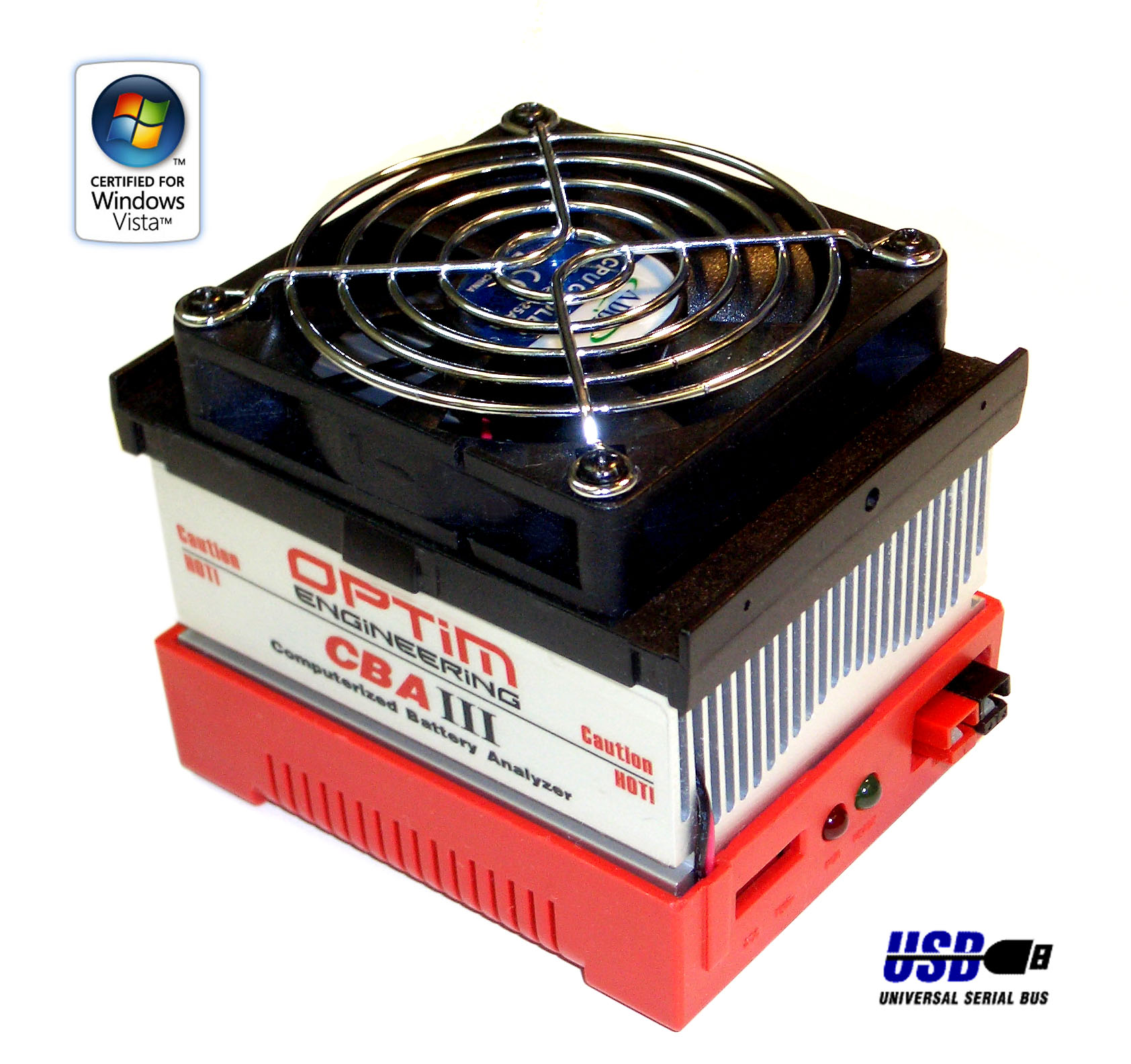
Ok, so we just got back from visiting friends in Logan. It's been a long day and I want to go to sleep but I have to put just one more battery on the CBA. I'm numbering each of the batteries that I test and I'm up to 77 with this last one that I'm doing for a friend.

So far, I've found that several of my main batteries (the ones I thought were reasonably good) are actually pretty much worthless (at least for more than a few Amp hours worth). I still have 4 or 5 more to gather and test for the first time (they're in use in various places), but I've gone through most of the rest now.

I also found out that some that I thought weren't that great test out like they're brand new. Of course there are some in between that aren't totally dead yet. Like the 100Ah behemoth that came out around 80Ah even though it's been sitting for 12 months.

Thursday, November 03, 2005

Mold your own ear piece

Steve (NV7V) just sent around this link: PodFitKit Home

Sure sounds a lot cheaper than paying a professional to come and do it for you. You can mess up quite a few times and still come out ahead!

Let me know if you or anyone you know trys it. (click the comments link)

Wednesday, November 02, 2005

Voltage set points on modified APC UPS units

I have noticed now that I have modified about 8 of these units that when they are attached to a battery, they float at different voltages depending on whether the main power switch is on or off.

Typically, the powered ON voltage is adjusted for about 13.8V (a good voltage to float most VRLA batteries). However, the powered OFF voltage jumps by up to 0.5V. This is a little high to float at for lengthy periods, but shouldn't hurt anything if left for a day or so. In fact, it may be helpful to let a battery float for a little while at this voltage to help equalize the individual cells. A fully charged 18Ah battery that had been floating at 13.8V drew only 60mA or so for a couple of minutes before dropping to less than 10mA when it reached 14.3V.

Float voltage adjustment

It's also interesting that the charge rates are different depending on the power switch. With the power switch ON, these units will charge a nearly dead battery at about 350mA. With the power switch OFF it charges at around 400mA. While this isn't exactly a fast charge for an 18Ah battery, it is plenty to maintain a bank of batteries in an always ready state. If you intend to charge batteries with one of these units, I would only count on about 5Ah a day.

Tuesday, November 01, 2005

Discharge cut-off voltages for VRLA/SLA batteries

I learned today by reading the technical manual on Power-Sonic's VRLA/SLA batteries that they recommended the following cut-off voltages for batteries under load:

Load to Volts per cell = 12V equivalent @ 68 degrees F
0.05C (20 hour rate) to 1.75V/cell = 10.50V (Ah available = 100% of rated capacity)
0.10C (9 hour rate) to 1.75V/cell = 10.50V (Ah available = 90% of rated capacity)
0.20C (4 hour rate) to 1.75V/cell = 10.50V (Ah available = 80% of rated capacity)
0.33C* (2 hour rate) to 1.67V/cell = 10.00V (Ah available = 72% of rated capacity)
0.50C (80 min rate) to 1.67V/cell = 10.00V (Ah available = 65% of rated capacity)
1.00C (33 min rate) to 1.50V/cell = 9.00V (Ah available = 55% of rated capacity)
2.00C (12 min rate) to 1.50V/cell = 9.00V (Ah available = 40% of rated capacity)
3.00C (7 min rate) to 1.37V/cell = 8.22V (Ah available = 36% of rated capacity)

*This rating was not in the data from Power-Sonic - I estimated it based on the other values because I needed a load value between .2C and .5C.

Of course other manufacturers will have somewhat different specifications, but I think these are pretty reasonable numbers and I intend to use them on future tests of VRLA/SLA batteries with my new battery analyzer in place of the default setting of 11.4V.

I also found the following interesting:

  • These recommendations cover batteries ranging from 0.5AH to 100.0Ah.
  • A 1C discharge rate reduces the Ah capacity rating to about 1/2 of the 20 hour rating (which is how most batteries are marketed).
  • A 3C discharge rate reduces the Ah capacity rating to about 1/3 of the 20 hour rate.
  • In the 400VA UPS units I have been modifying, 7Ah rated batteries were used. With a full load, this corresponds to a 3C discharge rate and should last about 7 minutes.
  • Replacing a 7Ah battery in a 400VA UPS with a battery* rated at 40Ah gives 70 minutes of run-time at full load. A 10x increase in run-time in exchange for a 6x increase in rated capacity.
*I often use multiple batteries in parallel.

Monday, October 31, 2005

Multi-purpose UPS modifications

So, I've been modifying some UPS units and thought others might like to do it. 120VAC can kill you, so don't try this if you're not prepared or are unsure about what you're doing!

I procured a bunch of old UPS units (mostly like these) from my employer who did not want to maintain them anymore. The batteries were ALL completely dead, but the units themselves were just fine. I suspect that quite a few units like these are in similar circumstances - they don't work, and companies are happy to get rid of them so they can get newer technology (higher current ratings, USB connections, etc.).

Anyway, what I've done is to modify them to accept battery power from an external source. This makes them quite versatile and useful to anyone who uses 12 volt batteries for more than just powering a UPS. I use mine for powering many devices, not the least of which are my radios.

With the modification, my UPS units now keep my batteries charged (they float at 13.8 volts and that is usually adjustable). In the event of a power failure, they use the batteries that are attached to them to provide backup power to devices plugged into them (my computer for example). Attaching multiple or large batteries allows the UPS to provide power for longer than it would with just the internal battery. Most of them allow me to use them just like an inverter (provide 120 V AC power to devices when camping, etc.) when not plugged into utility power.

The APC units that I've been working with will charge batteries at a pretty low rate (I still need to measure with dead and fully charged batteries). They're not fast chargers by any means but they should be able to juice up a small 7 Ah battery in a day or so.


Here are the basic ideas:
  • Plug it in and see if it comes on and will power a device. If this is a new-to-you device, it's nice to know if it works properly except for having a dead battery.
  • Now unplug the thing and get to work. (You got this part without my help right?)
  • Remove the dead battery. On units less than 5-6 years old, there's almost always a battery access panel. It is dead right? Even so, try not to short circuit it just in case the UPS circuitry is the problem and the battery is healthy.
  • Turn the power switch on and fiddle with the buttons (mine will usually let out a dying wail as the capacitors discharge completely).
  • Find a way to get the wires that attached to the battery out through the case so you can connect other batteries to the unit.
  • Remove the existing connectors.
  • Connect an extension wire to the short ones that are left in the unit. I have been working on 400-650 VA UPS units and have found that 12 gauge copper wire (like this) works great. You'll definitely want to keep the runs as short as possible (at max draw, a 650 VA UPS can pull 33 amps at 12 volts). 12 gauge copper wire is rated at 30 amps at 12 volts, so be sure to not overload it if you have a larger UPS that could pull more that that at full load.
  • Drill a hole somewhere in the case.
  • Feed the wire through the hole (with a grommet installed to protect the wire).
  • Close up the case.
  • Attach a connector to the wire. I use 30 amp Anderson Power Pole connectors. Of course, your battery should also have the same connectors on it. It would be good to have a fuse on the battery. Many UPS units have internal fuses (the APC ones I'm using have a 40 amp fuse soldered right onto their main circuit board).
  • Plug in the UPS.
  • Turn it on.
  • Check the voltage at the connector to make sure you got the polarity right and that it is what you are expecting.
  • You may want to unplug the unit from the wall or at least turn the unit off before connecting a battery. You may not need to do this, but the first time you test a newly modified unit, it's probably a good idea. Note that some units will keep the battery charge circuit energized while the UPS is switched OFF.
  • Connect a battery. You will want to use a Sealed Lead Acid (Gell or AGM) battery only as the charging circuitry is designed for them. Using a flooded battery like you would use in a car, boat, etc. will not work as well unless you adjust the voltage of the charger.
  • Plug in the UPS.
  • Turn it on.
  • Check the voltage at the battery to make sure it is what you expect.
So, for not a whole lot of money, you can get an older UPS unit that does all of this:
  • UPS
  • 12 volt Sealed Lead Acid battery charger
  • Inverter
Great reading material on batteries is available at Battery University.